

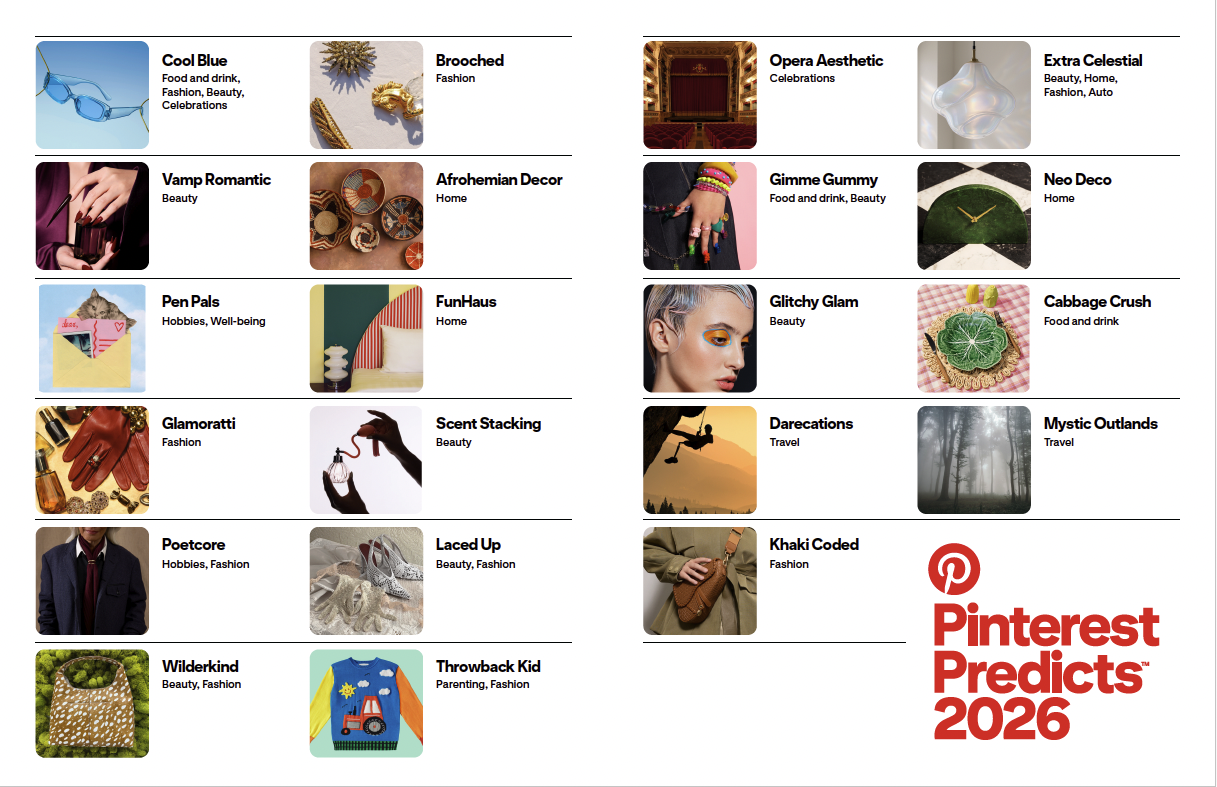
2026 is shaping up to be a much more colourful year for interiors. Finally! Each year, Pinterest releases its Pinterest Predicts trend forecast, looking at the ideas gaining momentum across interiors, fashion, beauty, food, travel and culture.
And as a Melbourne interior designer who works with colour every day, there’s a lot in the interior design trends of 2026 that I’m very happy to see. Colour. Pattern. Craft. Vintage influences. Interesting shapes. Interiors that don’t take themselves quite so seriously.
But I’m also going to say something slightly contradictory. I don’t think you should design your home around a trend report.
Trends can be incredibly useful for inspiration. They can introduce us to colour combinations, materials and ideas we might not have previously considered. But your home isn’t a Pinterest board and you shouldn’t suddenly buy a cobalt sofa because someone has declared it the colour of the year.
What interests me much more about the Pinterest Predicts 2026 report is the bigger shift happening behind these individual trends. We’re moving away from interiors where everything matches, everything is neutral and every home could belong to anybody.
Instead, we’re seeing more colour, pattern, craft, collected pieces and interiors that actually tell us something about the people living there. That’s the part of the 2026 interior design trends I’m interested in.
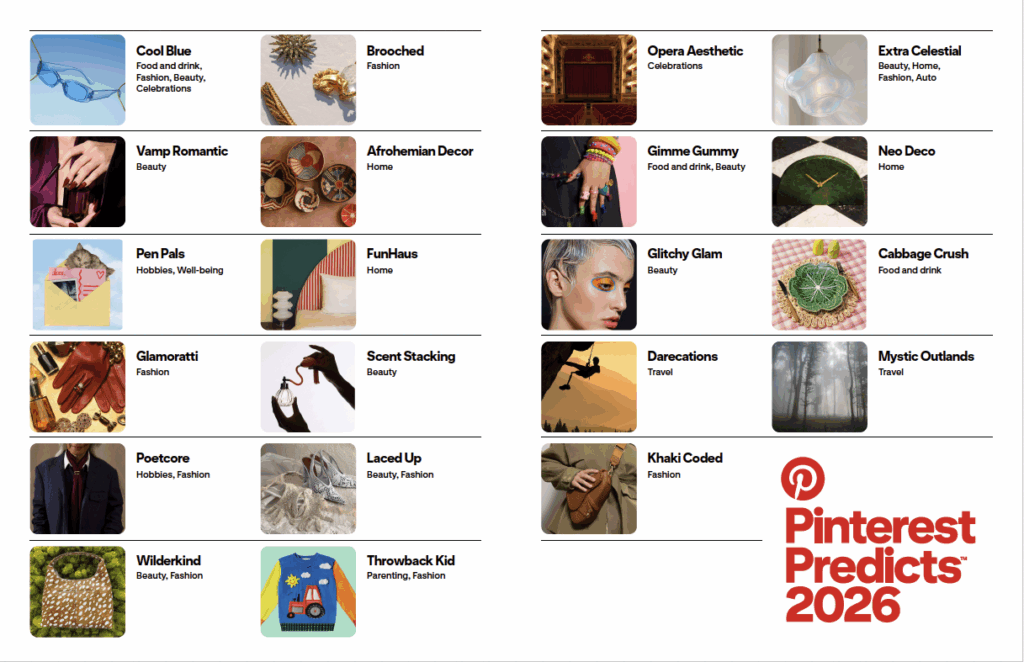
What is Pinterest Predicts 2026?
Pinterest Predicts is Pinterest’s annual forecast of emerging trends based on what people are searching, saving and engaging with across the platform.
For 2026, Pinterest has identified 21 trends across everything from fashion and beauty to food, travel and interiors. For the home, four in particular caught my attention: Afrohemian Decor, FunHaus, Neo Deco and Extra Celestial. They’re all very different.
But look beyond the individual aesthetics and there’s something connecting them: none of them are particularly interested in playing it safe. So rather than telling you to recreate each trend in your home, I want to look at what we can actually take from them. Because there’s a big difference between being inspired by a trend and designing your entire house around one.
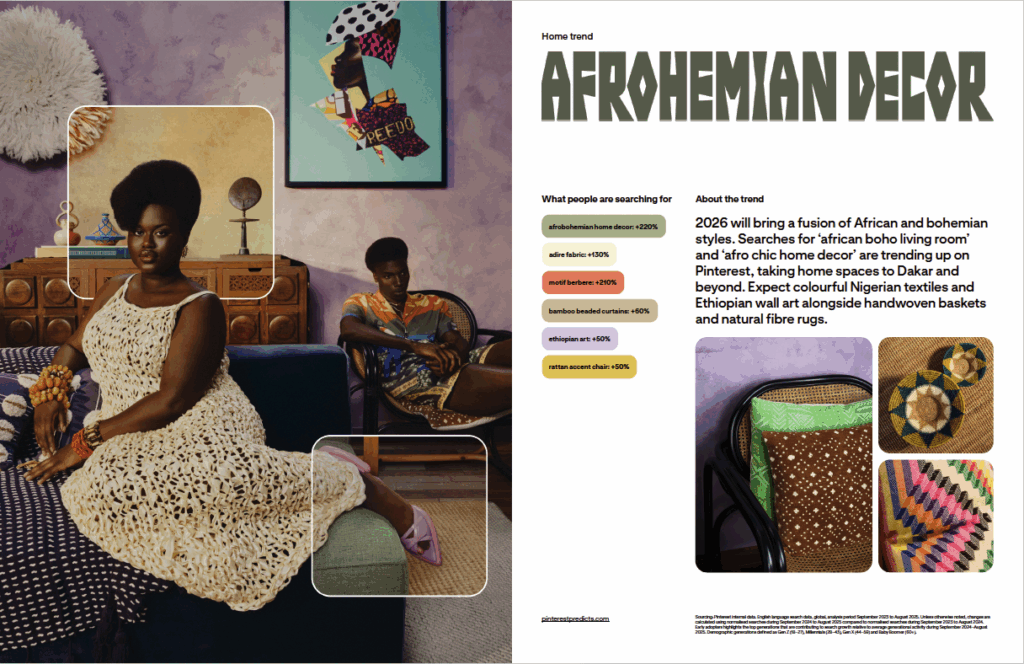
Afrohemian Decor
Afrohemian Decor brings together African influences with a more relaxed, layered approach to interiors. There’s warmth, pattern, natural materials, rich earthy colour and an emphasis on pieces that feel handmade or collected rather than mass-produced.
Think terracotta, ochre, rust, clay, deep indigo and warm timber alongside woven textiles, ceramics, pattern and natural fibres.
But what interests me isn’t necessarily the idea of creating an “Afrohemian home”. It’s the emphasis on story and craft.
We’ve spent a long time seeing interiors where everything is purchased at once from the same handful of stores. The sofa matches the occasional chairs. The cushions came as a set. The artwork fills the blank wall because something needed to go there. A home can feel very different when we start layering in pieces with meaning.
Artwork you’ve collected. Something brought home from travelling. A vintage chair. Handmade ceramics. A rug that doesn’t perfectly match everything else in the room. These pieces give us something to build around.
- Warm terracotta, ochre, mud brown, rust and clay
- Hand-woven patterns, tribal motifs, imperfect lines
- Deep indigo and charcoal as grounding accents
- Rattan chairs, low timber coffee tables
- Textural cushions, hand-loomed throws
- Statement wall art celebrating culture and craft
- Oversized indoor plants for softness and life
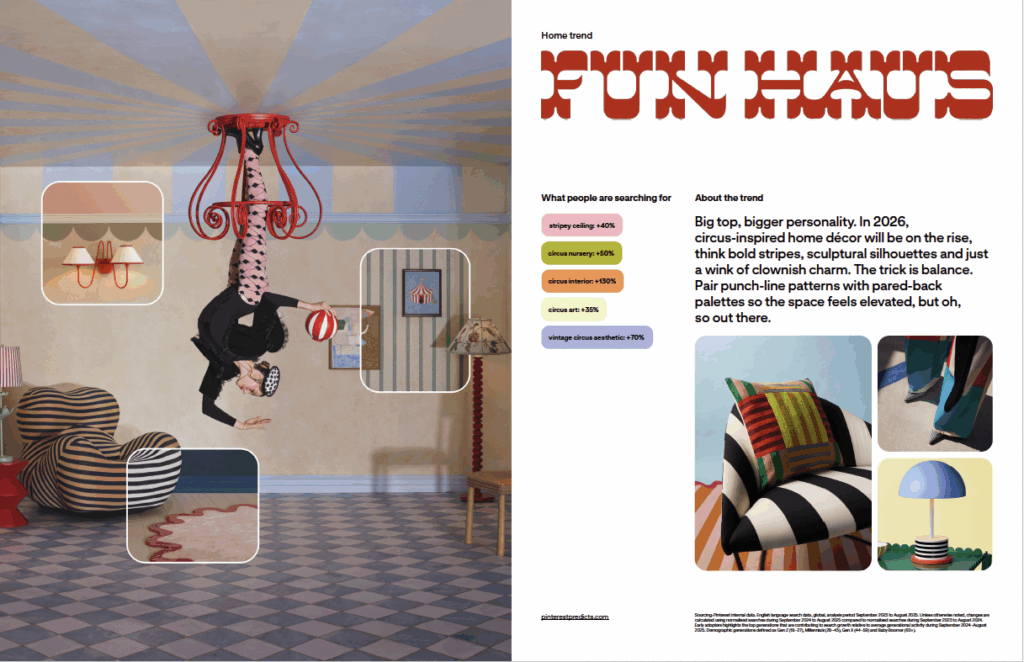
Fun Haus
Fun Haus is probably the trend I’m most interested in, not because I think everyone should suddenly cover their home in circus stripes, but because of what it represents.
Interiors have become very serious. We’ve spent years looking at perfectly styled rooms in white, beige and grey, and Fun Haus feels like a reaction to that. There’s colour, exaggerated shapes, stripes, curves and furniture that doesn’t disappear quietly into the background.
If you love British interiors, you’ll probably recognise some of this attitude. Pattern doesn’t have to match perfectly. Colour can be unexpected. A lamp can be funny. Furniture can have personality. But I wouldn’t turn your house into a Fun Haus-themed interior. Take the idea, not the entire trend.
That might be a striped wallpaper in a powder room, an unexpected paint colour on the ceiling, a sculptural lamp or an armchair in a fabric that makes you smile every time you walk past it.
You don’t need every piece in your home to behave itself.
- Bold stripes
- Saturated reds, cobalt blues, lemon yellow and candy pastels
- Sculptural curves, graphic lines and joyful silhouettes
- Striped wallpapers
- Curved sofas or armchairs
- Wavy tables, candy-coloured lamps
- Checkerboard and circus-inspired rugs
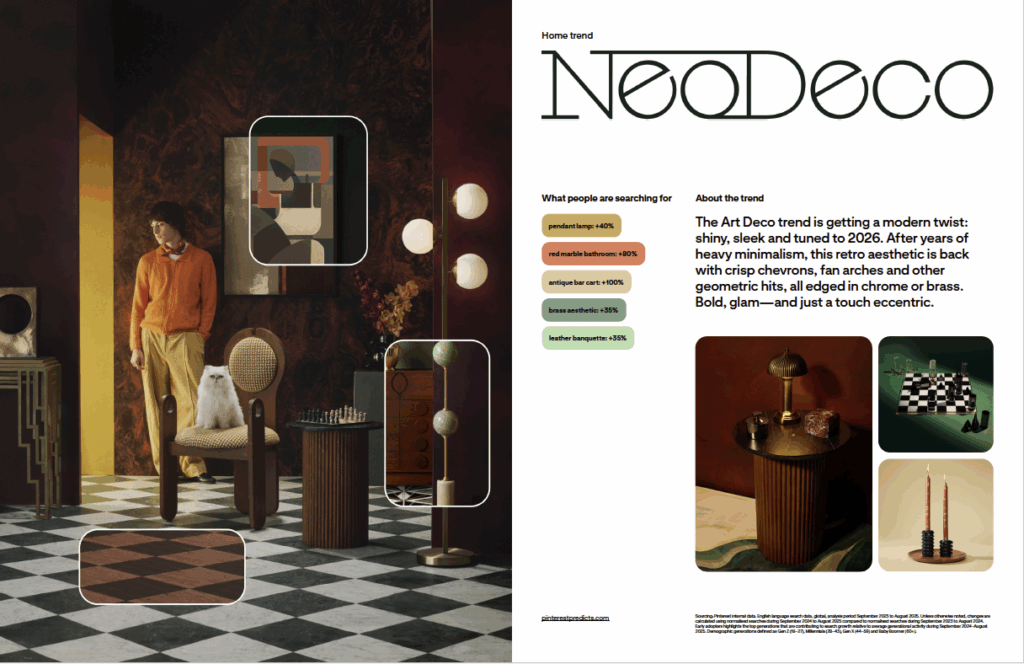
Neo Deco
Art Deco already has a strong relationship with Melbourne, so it’s not surprising that Neo Deco caught my attention.
Pinterest describes the trend through bold glamour and eccentricity, but for interiors I think the interesting part is how familiar Deco elements are being reinterpreted rather than simply reproduced. Curves. Strong geometry. Chrome and brass. Darker timbers. Stone. Jewel colours. Gloss against softer fabrics.
There are plenty of ways these ideas can find their way into a contemporary Melbourne home without making the interior feel like a 1920s film set. We might use a curved island bench or custom joinery detail. Perhaps it’s a stone with stronger movement, a geometric tile, an incredible mirror or a piece of furniture with chrome detailing.
And if you’re lucky enough to own an original Art Deco home, I’d be looking at what is already there before adding anything. Original details don’t necessarily need to be stripped out to make a home feel contemporary. Sometimes the better approach is understanding what deserves to stay and what can sit beside it.
- Emerald, garnet, sapphire and rich jewel tones
- Brass, chrome, dark timber, marble
- Glossy surfaces paired with plush fabrics
- Velvet armchairs
- Brass lighting
- Marble coffee tables
- Architectural mirrors with Deco silhouettes
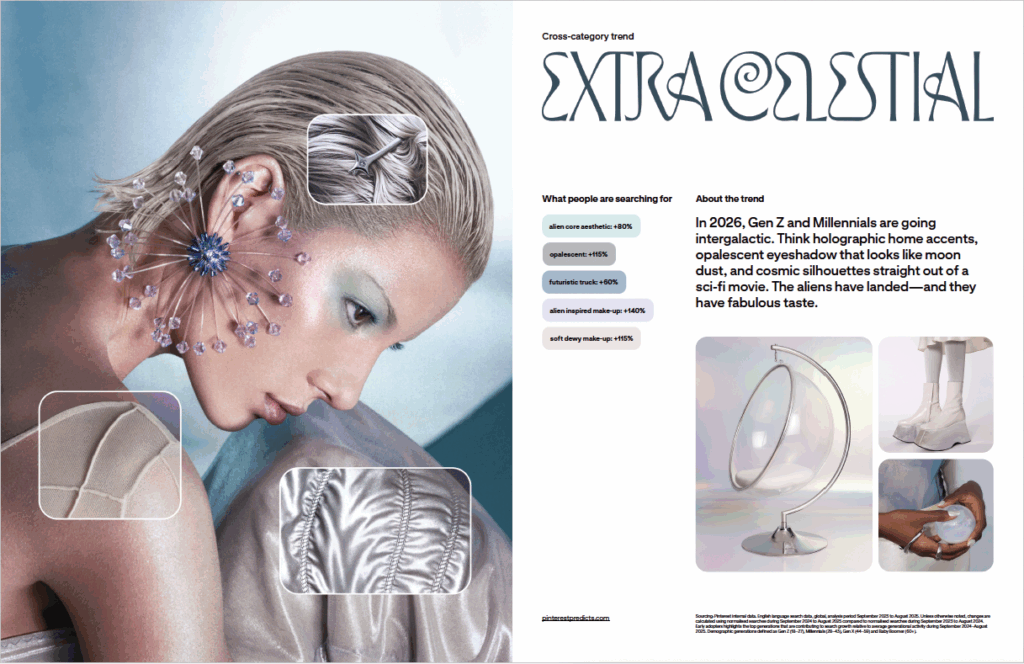
Extra Celestial
Extra Celestial takes us somewhere completely different. It’s futuristic, cosmic and reflective, with metallic finishes, iridescence, unusual curves and a slightly sci-fi feeling. Chrome is a big part of this conversation, and we’ve already been seeing it return across furniture and lighting.
Would I cover an entire Melbourne home in holographic finishes? Probably not.
But I do like what this trend says about our willingness to introduce something unexpected. A chrome floor lamp. A sculptural pendant. A mirrored detail. An unusual side table. A piece of furniture with a shape that almost feels like artwork.
Sometimes a room needs one thing that doesn’t quite make sense on paper. And that can be the thing that gives it personality.
- Deep space blues, soft lilac, gunmetal grey
- Chrome, mirror, iridescent textures
- Rounded forms and orbital shapes
- Chrome leg details
- Holographic cushions
- Sculptural lighting that looks like floating planets
- Mirrored furniture for reflective depth
What the 2026 interior design trends are really telling us
What interests me most isn’t whether Afrohemian Decor, FunHaus, Neo Deco or Extra Celestial will still be appearing on Pinterest in three years.
It’s what they have in common. They’re moving away from the idea that a “good” interior needs to be neutral.
We’re seeing more pattern. More craft. More interesting colour combinations. More willingness to mix influences rather than trying to make an entire home fit neatly into one interior design style. And I’m here for that.
But this doesn’t mean your home suddenly needs to become colourful because colour is having a moment. If you’ve always loved colour, perhaps the shift we’re seeing simply gives you a little more confidence to use it. If you genuinely love quieter interiors, you don’t need to start painting everything cobalt blue.
The point is to stop making decisions purely because they’re safe and start asking whether they’re actually right for you. I think this movement towards more personal interiors is an interesting reaction to the years of white kitchens, grey sofas and spaces designed with resale in mind. People are ready for homes that tell us something about the people who live there.
At Nikki Weedon Interiors, we create colour-led Melbourne interiors around the people who actually live in them, bringing together colour, materials, custom joinery, furniture, art and the pieces that make a house feel like home.
Through our Full Service Interior Design & Decoration, we can take your project from the initial concept through to design, documentation, furniture, procurement and the final installation.
If you’re planning a renovation or decoration project and you’re ready to create a home with more personality, book a discovery call and tell us what you’ve been saving.

